
Lanquill vs. Spoken English Classes
The online language lab
Learn on screen
AI speech analysis, grammar checking, and CEFR certification - built for institutions that need to move hundreds of students at once.
The classroom, as always
Learn out loud
A trainer, a room, and live conversation. The decades-old default for building real confidence out loud.
If you're running a college, training institute, or corporate program, you've likely faced this choice: invest in traditional spoken English classes, or bring in an AI platform like Lanquill. We looked at what both sides of this market actually offer - here's an honest comparison.
At a glance
What Lanquill is
A digital English language lab
- Speech analyzer - real-time pronunciation and accent feedback
- Grammar checker - sentence structure, style, and voice
- Adaptive reading & vocabulary - content that adjusts to proficiency
- CEFR certification - seven structured, benchmarked levels
- Faculty dashboard - real-time progress across every student
What classes are
Trainer-led conversation practice
- Human feedback - tone, context, and cultural cues an algorithm can miss
- Live conversation - group discussion, debate, role-play
- Accountability - a scheduled class drives more consistent attendance
- In-the-moment adaptation - trainers improvise around real confusion
- No fixed script - nuance and humor come naturally
Who else is in this space
Neither Lanquill nor the neighborhood coaching institute operates alone. Here's roughly where each sits next to its actual peers.
AI & ed-tech platforms
Lanquill's real competitive set
- LanquillInstitutional language lab, CEFR-certified, from ₹600
- DuolingoConsumer app, gamified, broad language coverage
- ELSA SpeakPronunciation-focused, AI accent coaching
- SpeexxEnterprise business-English training at scale
- Preply Business1:1 tutor marketplace, human tutors online
Trainer-led options
What "spoken English classes" usually means
- Neighborhood institutes₹1,500–₹4,000 per 3-month course, batch format
- Corporate/college trainersContracted faculty, fixed timetable
- Premium 1:1 online tutorsRoughly ₹3,000–₹3,700 per session
- Self-study video coursesOne-time fee, no live feedback loop
How they stack up, factor by factor
| Lanquill | Spoken English Classes | |
|---|---|---|
| Scale | One platform serves hundreds or thousands of students at once | Limited by trainer-to-student ratio |
| Consistency | Every learner gets identical, benchmarked feedback | Quality varies by trainer |
| Cost per student | Starts around ₹600, drops further at scale | ₹1,500–₹4,000 per course; ₹3,000+ per 1:1 session online |
| Feedback speed | Instant, automated | Delayed, dependent on trainer availability |
| Certification | Built-in, CEFR-aligned, standardized | Often informal or institute-specific |
| Motivation | Weaker - no live accountability | Stronger - peer pressure, live encouragement |
| Nuance & humor | Limited - AI struggles with subtlety | Strong - trainers adapt naturally |
| Infrastructure | Minimal - cloud, web, mobile | Requires space, scheduling, staffing |
Where each one actually wins
Choose Lanquill when
- ●You need to certify large batches against a common standard without hiring more trainers
- ●Administrators need measurable proficiency data for placement readiness
- ●Budget or faculty availability limits how much live coaching is realistic
- ●Students need a self-paced supplement outside class hours
Choose classes when
- ○The goal is real-world confidence - negotiating, presenting, unpredictable dialogue
- ○Learners need encouragement and correction with empathy
- ○Group dynamics - debates, discussions, mock interviews - are central
- ○Culturally aware, in-the-moment coaching matters most
It's rarely either/or
Most institutions getting real results aren't choosing one over the other. They use a platform like Lanquill for what scales well - grammar drilling, pronunciation feedback, vocabulary, standardized assessment - and reserve limited trainer time for what doesn't scale: live conversation, interview simulation, nuanced feedback. AI handles repetition and data. A trainer still handles judgment and spontaneity.
The bottom line
The real question isn't which tool is better in the abstract - it's where your current bottleneck actually sits. If it's scale and standardization, an AI platform like Lanquill solves that directly, and at a lower cost per student than most trainer-led options on the market. If it's conversational confidence and real-time coaching, no algorithm - Lanquill included - fully replaces a good trainer yet.
The strongest English programs right now aren't picking a side. They're blending both.
See where Lanquill fits your program
We'll walk through your current setup - batch size, trainer capacity, budget - and show exactly where an AI layer would take the load off your trainers.
Related Articles
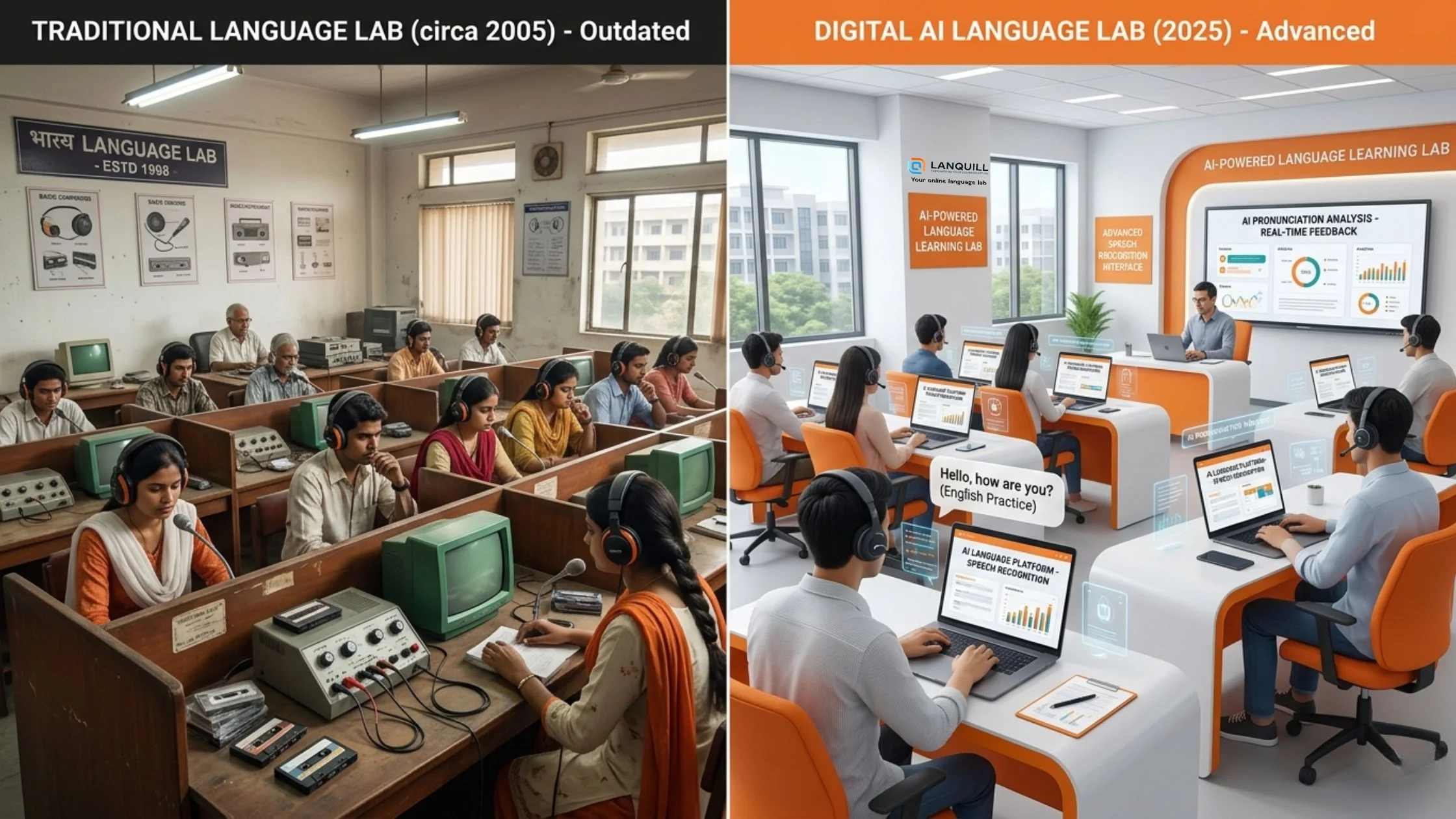
Traditional vs Digital Language Labs for Colleges (2026 Guide)
Compare traditional vs digital language labs and discover which is better for colleges to improve communication skills and placement outcomes.

What is an English Language Lab for Colleges? Benefits Explained
Learn what an English language lab for colleges is and how it improves communication skills, placement readiness, and student outcomes.
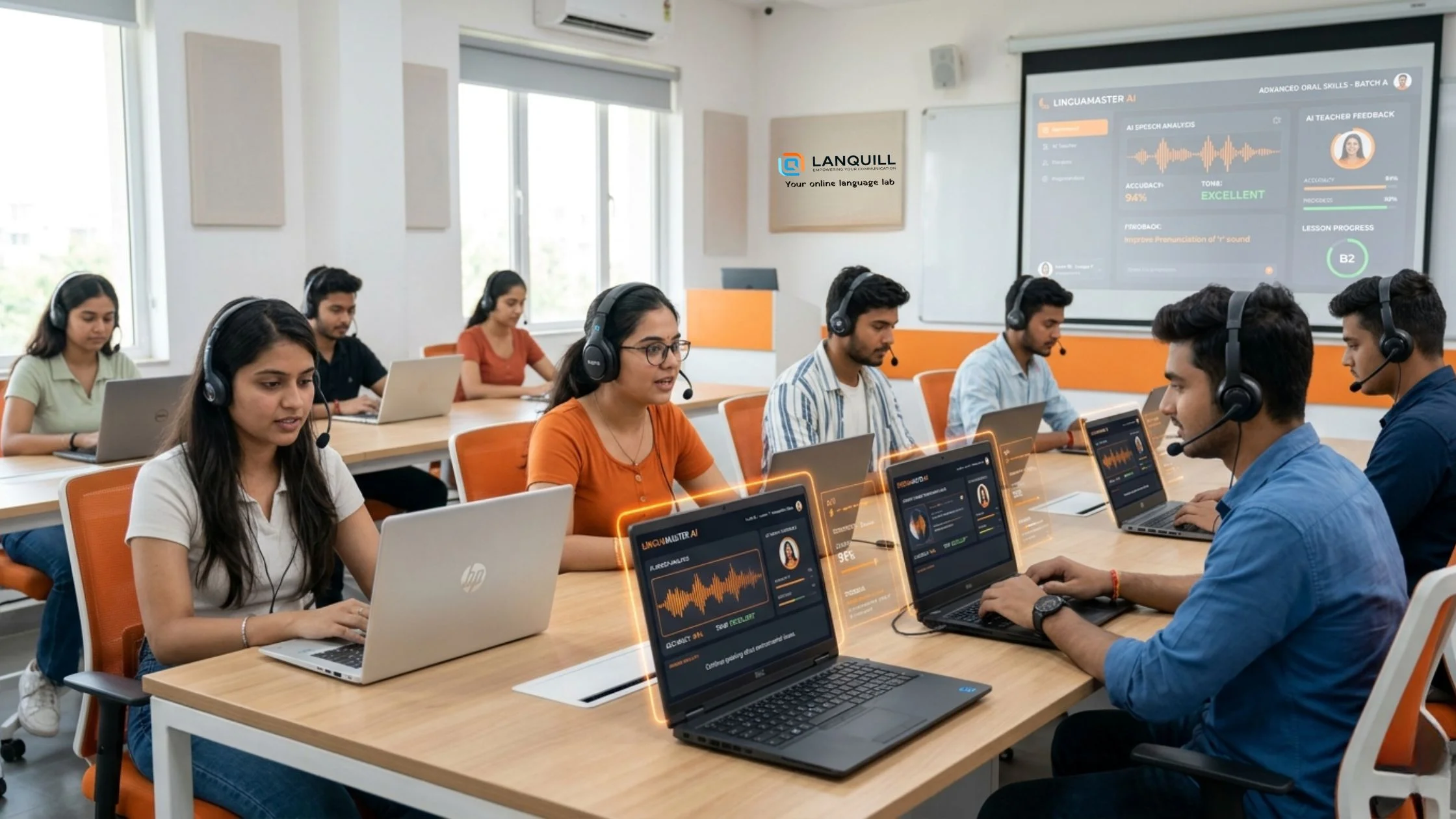
Why Every College Needs an AI Language Lab in 2026
Discover why every college needs an AI language lab in 2026 to improve student communication and placement readiness.

From Classroom to Career: How CEFR-Aligned English Courses Build Employability
Learn how CEFR-aligned English courses improve workplace communication and career readiness.

How Modern English Language Labs Are Transforming Communication Skills in Classrooms
Explore how modern language labs improve communication skills using technology.
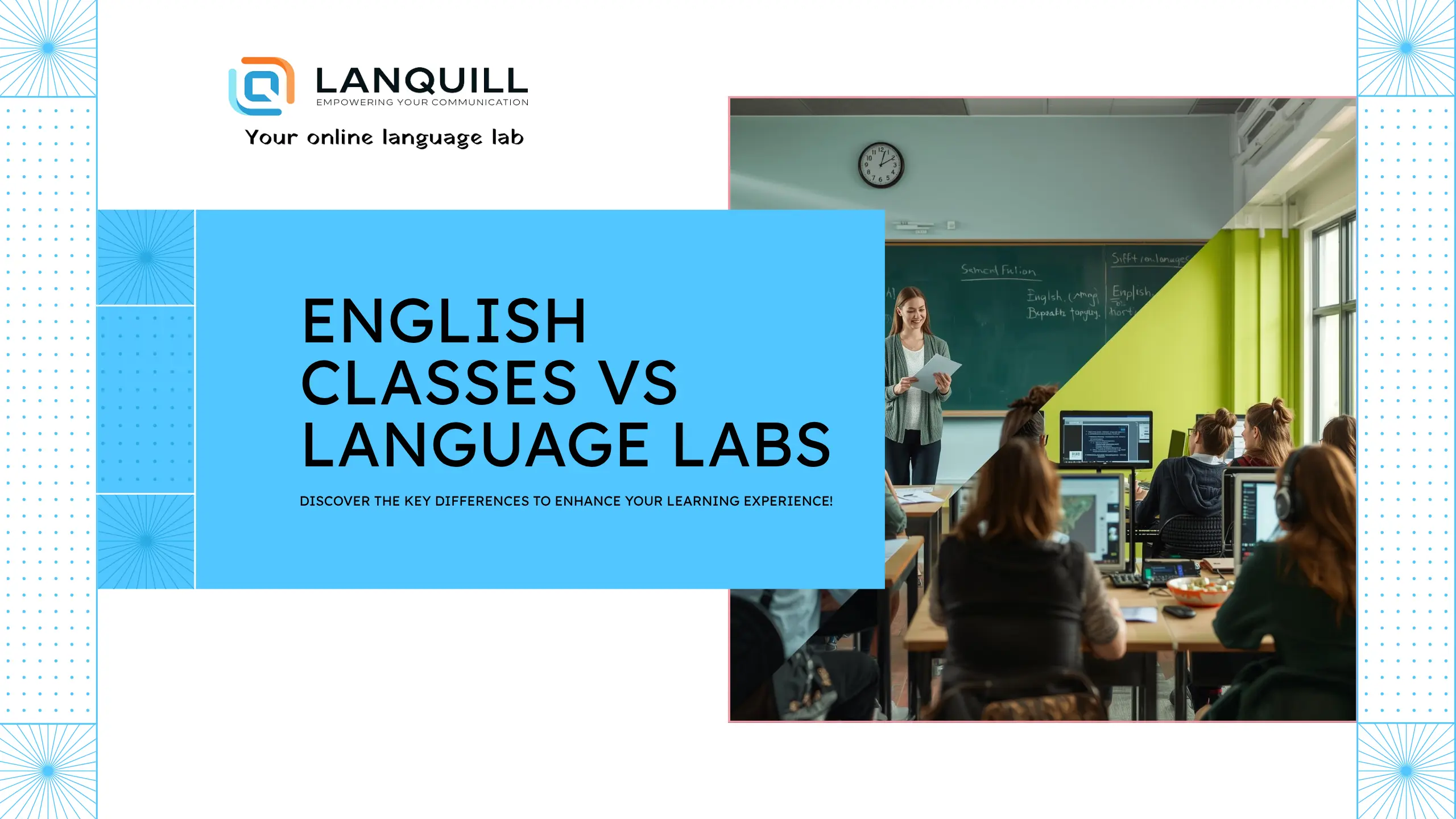
English Spoken Classes vs English Language Lab: Key Differences You Should Know
Compare spoken English classes and language labs to understand their approaches and outcomes.